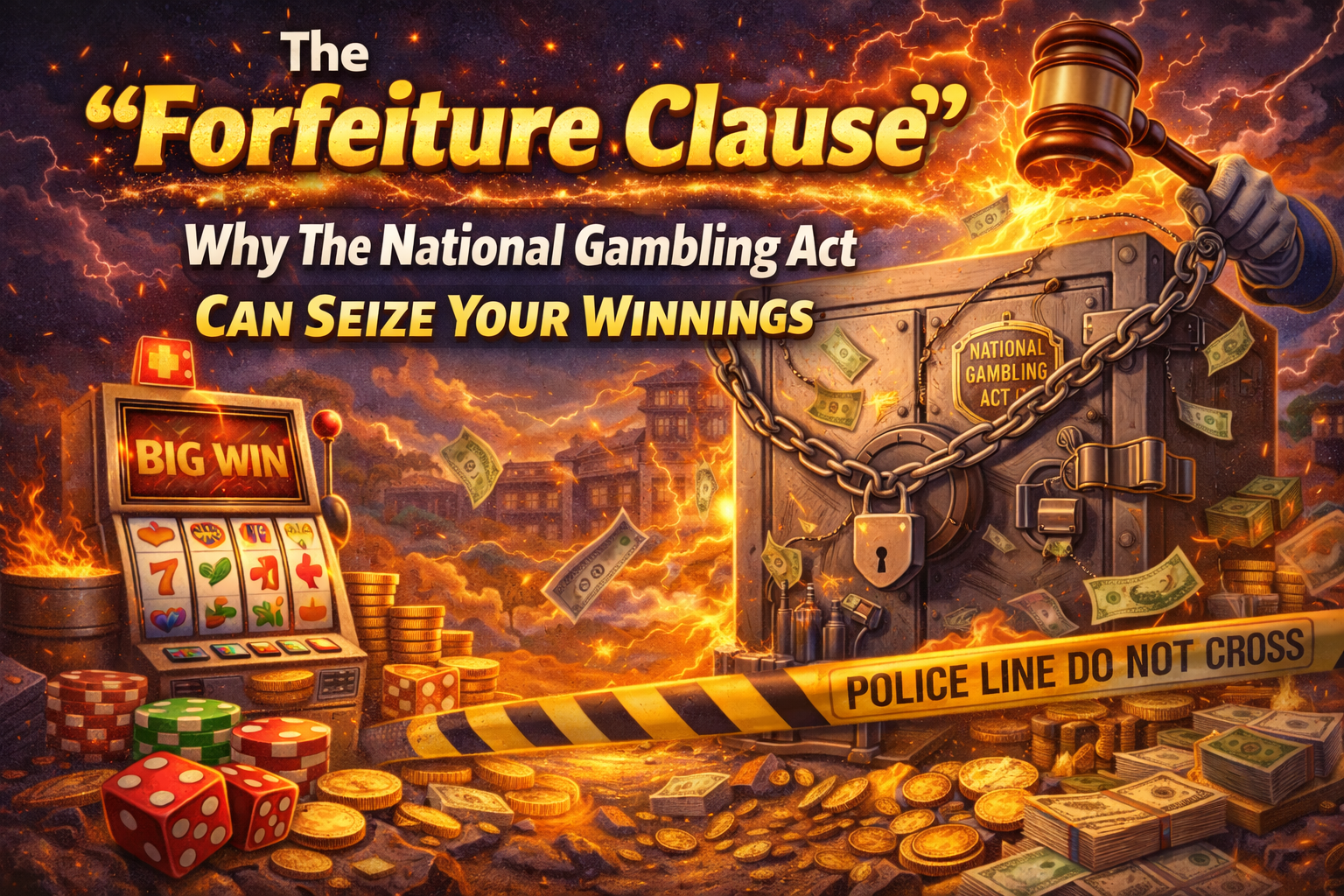
We often worry about "house edge" or "RTP," but the biggest threat to your winnings might be the law itself. We analyzed the National Gambling Act 7 of 2004 and its pivotal 2008 Amendment, which laid the groundwork for the online era.
Buried in these texts are strict federal laws that override everything else. If you break these rules, the casino doesn't just refuse to pay you—the High Court can legally take your money.
1. The "Interactive" Definition (The Online Framework)
For years, "online gambling" was a legal grey area. The National Gambling Amendment Act of 2008 changed that by formally defining "Interactive Games."
It specifies that an interactive game is any gambling game played through an "electronic agent accessed over the Internet". Crucially, Section 11 was amended to state clearly:
"A person must not engage in, facilitate or make available an interactive game except as authorised... under a license issued in terms of this Act".
This is the "kill switch" for illegal offshore sites. If a site does not hold a license recognized by this specific Act, playing on it is technically unlawful.
2. The "Forfeiture Clause" (Section 16)
This is the scariest section in the entire rulebook. What happens if you win R1 million on an illegal site, or if you gamble while you are on the "Excluded Persons" list?
You do not get to keep the money. But the casino does not get to keep it either. Section 16(3) of the 2004 Act mandates that any winnings from unlawful gambling must be remitted to the National Gambling Board to be held in trust. The Board then investigates. If they find the activity was unlawful, they must:
"Apply to the High Court for an order declaring the winnings forfeit to the State".
Your winnings literally become government property.
3. The "No Credit" Rule (Section 13)
Have you ever wondered why you can't just ask Betway or Hollywoodbets to "front you" R500 until payday? It is not because they are mean; it is because Section 13 explicitly forbids it.
The Act states: "A person licensed to make any gambling activity available to the public must not extend credit... to any person for the purposes of gambling". The 2008 Amendment doubles down on this for online players, stating an interactive provider "may not extend credit" to any player for interactive games. You play with cash, or you don't play at all.
The Verdict
The National Gambling Act is not just red tape. It is a rigid framework designed to cut off illegal money flows. The next time you see a "too good to be true" offer from an unlicensed offshore casino, remember Section 16. If the High Court gets involved, the only winner will be the State.